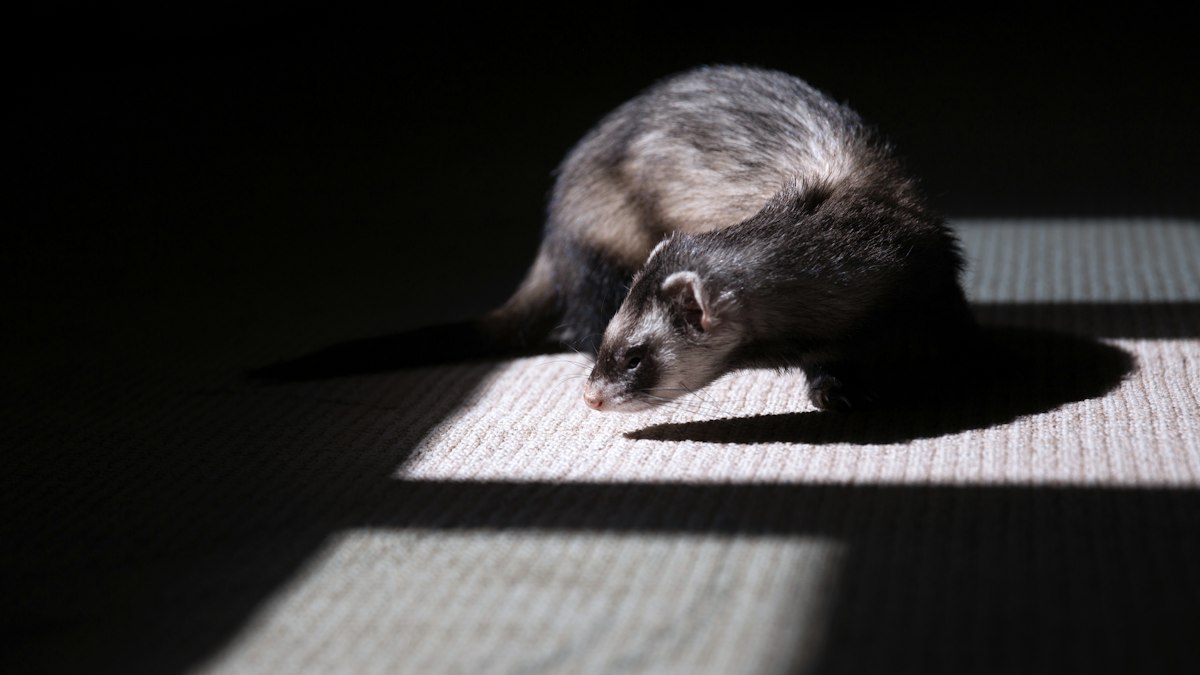
Ferret Care UK: A Beginner's Guide
In short: a ferret needs a large multi-level cage, several supervised hours outside it every day, a high-meat diet and an annual distemper vaccination. They are sociable, so two ferrets are usually easier than one. Here is what a first-time UK owner needs to get right in the first month.
Ferrets are not rodents and they are not a beginner's version of a hamster. They are domesticated mustelids, close relatives of the polecat, and they were kept for centuries as working animals that went down rabbit burrows. That history explains almost everything about their care: they are bold, curious, relentless diggers, and they need far more space and attention than a cage in the corner suggests.
The good news is that the requirements are not complicated. Get the housing, the diet and the daily routine right, and a ferret is a hardy pet that lives somewhere between six and ten years. Get them wrong, and you end up with a bored animal that chews through your furniture and a vet bill you did not plan for.
Is a Ferret the Right Pet for You?
Ferrets sleep for around eighteen hours a day, usually in long stretches, and then wake up with a burst of energy that is genuinely impressive. In that awake window they want to run, dig, climb and explore. An owner who is out of the house for twelve hours a day and wants a pet that sits on a lap is a poor match. An owner who is home in the evening and enjoys a small, busy animal that gets into everything is a good one.
They are social animals too, and most owners keep two, which means twice the cage space and twice the food bill.
Housing: What a Ferret Cage Actually Needs
Ferrets are long, flexible and determined, so the cage has to be tall, secure and free of gaps they can squeeze through. The features that matter most are multiple levels, because ferrets like to climb between sleeping spots, a solid base for a litter tray, and bar spacing narrow enough that a slim ferret cannot push its head through.
Multi-level cages built for rats and chinchillas are the usual starting point, and they work well if they are big enough. The MidWest Critter Nation is the most widely used option in the UK for good reason: it is large, the shelves are solid rather than wire, and the doors open fully for cleaning. The Little Friends Chatsworth gives you a second tier of height for a similar footprint, while the Cozy Pet RC05 is a cheaper multi-level option that suits a pair as long as you add hammocks and a dig box.
Whatever cage you choose, line the base with paper bedding rather than wood shavings, and add at least one sleeping hammock. Ferrets choose the highest point in the cage to sleep, so a hammock near the roof gets used far more than a bed on the floor. Place the cage in a room that stays cool, since ferrets handle cold far better than heat, and keep it out of direct sunlight.
Feeding a Ferret in the UK
Ferrets are obligate carnivores with a short digestive tract, which means they need animal protein and fat rather than fibre and carbohydrate. In practice that means a ferret-specific complete food, or a high-meat kitten food as a substitute if you cannot get one locally, with meat named first on the label.
Sugar, dairy and fruit all cause problems, so resist the urge to share human treats. Fresh water should always be available in a heavy bowl that cannot be tipped over.
Kits eat almost constantly while they grow, and adults settle into two or three meals a day. Weigh your ferret every few weeks, because weight change is often the first sign that something is wrong with an animal that hides illness well.
Litter Training and Cleaning
Ferrets are naturally clean animals and most will use a corner tray with very little training. Put the tray where the ferret has already chosen to go, keep it clean daily, and add a second tray once the cage has more than one level. Paper pellet or paper-based litter works best. Avoid clumping cat litter and anything dusty, because ferrets put their noses close to the floor constantly.
A dust-free paper bedding also works well as a litter tray lining and as bedding for the older ferrets that dribble, which is common in a neutered male. Clean the tray every day, wash the bedding weekly, and wipe the cage shelves with a pet-safe cleaner rather than anything heavily perfumed.
Enrichment and Ferret-Proofing
Boredom is the main cause of the behaviour problems owners complain about, and a ferret that chews furniture or digs at carpets is usually a ferret that needs more to do. Aim for several hours of supervised time outside the cage daily, split into two or three sessions, in a room you have made safe first.
The cheap enrichment that works best is a box of long tubes, a deep tray of clean soil or paper pellets for digging, and a handful of hard plastic or rubber toys that cannot be swallowed. Rotate the toys weekly so the room does not become familiar. Ferrets lose interest in the same object far faster than dogs do.
Ferret-proofing matters as much as the toys. Block gaps under kitchen units and behind appliances, remove foam and rubber objects, and keep cables bundled and out of reach. Ferrets that swallow soft rubber or foam need surgery, and the warning signs, vomiting, going off food and passing nothing, are the point at which you call a vet rather than wait. Latex toys and foam earplugs are two of the most common culprits.
Health Care and Vaccination
Ferrets need an annual vaccination against canine distemper, which is the disease most likely to kill an unvaccinated animal that meets an infected dog outdoors. Book that at the same time as a general health check and ask your vet to check teeth, ears and weight.
Two conditions are common enough in middle-aged ferrets that every owner should know the names. Adrenal disease shows up as hair loss, usually starting at the tail base, and it is treatable when caught early. Insulinoma causes weakness and collapse, often a few hours after a missed meal, and it needs a diagnosis rather than guesswork. If your ferret goes wobbly or glassy-eyed after exercise, that is a vet visit, not a wait-and-see.
Find a practice that treats small animals and exotic species before you need one, because an emergency is the worst time to discover your vet does not see ferrets.
Ferrets in the UK: What the Law Says
Ferrets are legal to keep as pets in the UK and they do not need a licence from a local authority. They are covered by the Animal Welfare Act, which means the owner is responsible for meeting the animal's needs for space, food, company and veterinary care, and abandoning a ferret is an offence.
Products Mentioned
- MidWest Critter Nation Single Unit - large multi-level cage with solid shelves
- Little Friends Chatsworth Double - tall two-tier cage for a pair
- Cozy Pet RC05 - lower cost multi-level option
- Back-2-Nature paper bedding - paper litter and bedding base
- Carefresh dust-free paper bedding - soft option for litter trays
Frequently Asked Questions
Do ferrets smell?
They have a natural musky scent from their skin glands, and a neutered ferret kept in a clean cage is far less pungent than people expect. Bathing too often makes the smell worse, because it strips the coat oils and the skin produces more to compensate. Clean bedding and a daily litter tray change do more than any shampoo.
How long do ferrets live?
Most UK pet ferrets live between six and ten years. Neutering and good nutrition are the main factors within your control, and the common health problems of middle age are far more manageable when they are caught early.
Can ferrets live with cats and dogs?
It works in many households, but it has to be managed rather than assumed. Dogs with a strong hunting instinct are a genuine risk to a ferret, and cats usually learn to avoid a ferret after one meeting. Introductions should always be supervised, with the ferret in a harness or a secure run if the other animal is large.
How much time outside the cage do ferrets need?
Plan for at least three to four hours of supervised time out of the cage each day, in sessions rather than one long stretch. A ferret-proved room with tunnels and a dig box makes that time much easier to provide, and it prevents most of the destructive behaviour owners complain about.
Do ferrets need a companion?
They are social animals and a pair is generally easier to keep than a single ferret, because they entertain each other. Two ferrets need a bigger cage and more food, but they are less likely to become bored or to chew their way out of the enclosure.
Final Verdict
A ferret is a rewarding pet for the right household, and an awkward one for the wrong household. Budget for a large multi-level cage such as the MidWest Critter Nation, several hours of supervised time out every day, a meat-based diet and an annual distemper vaccination. Add a companion if you can manage two animals rather than one, and find a vet who treats ferrets before you need one urgently.
If you are still deciding, our ferret cage comparison covers the housing options in more detail, and our small animal cage guide explains why multi-level cages beat single-storey hutches for climbers. For the rodent side of small pet keeping, the gerbil care guide follows the same principle of matching the enclosure to the species.

Nina writes about small pets and birds for WhoPets, with a focus on proper care standards. She has owned hamsters, guinea pigs and budgerigars, and cares about evidence-based husbandry over trendy pet products.
As an Amazon Associate we earn from qualifying purchases.
Last reviewed: September 11, 2026 · Evidence-based content · Contains affiliate links