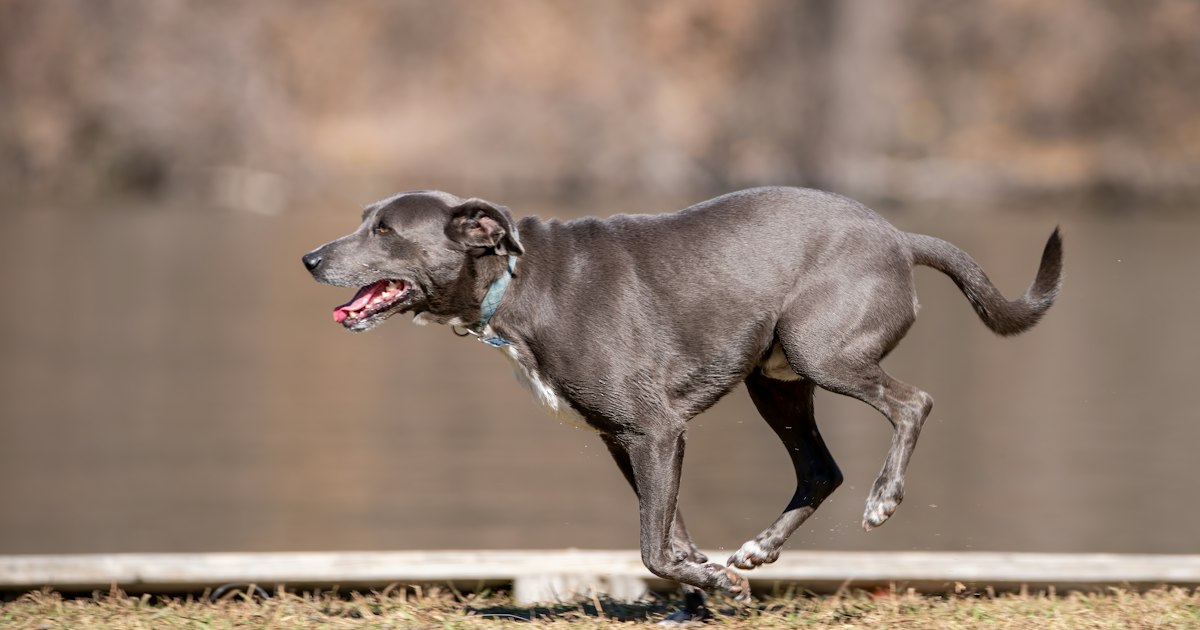
How Much Exercise Does a Dog Need?
Most dogs are walked either too little or, less often, too much, and the right answer depends on breed, age and health rather than on a fixed number. Here is how to work out a sensible daily target for your dog.
The short answer: most adult dogs need 30 minutes to two hours of activity a day, split across one or two walks, plus some mental work. Puppies need far less structured exercise than owners expect, and flat faced breeds need less than almost everyone assumes.
Key Takeaways
- 30 minutes to two hours a day covers most adult dogs, with herding and working breeds at the top and flat faced breeds at the bottom.
- Puppies need less than you think. Five minutes per month of age, twice a day, is the familiar guidance until growth plates close.
- Sniffing is exercise. Ten minutes of scent work tires many dogs more than an hour of lead walking.
- Heat changes the plan. Pavement temperature and breed shape decide whether a walk is safe, not the time on the clock.
- Watch the next day. Stiffness or reluctance after a walk means the session was too much, not that your dog is lazy.
1. Daily exercise by breed group
These are sensible working ranges rather than rules. A dog that is fit, healthy and happy at the lower end of its range does not need to be pushed.
- Working and herding breeds such as Border Collies, German Shepherds, Labradors and spaniels: 90 minutes to two hours, ideally with some off lead running, retrieving or training.
- Terriers such as Jack Russells and Staffies: 60 to 90 minutes. Brisk, varied and with something to chase or dig.
- Gundogs and hounds such as Beagles and Setters: 60 to 120 minutes, and hounds benefit from scent games because their nose runs the walk.
- Crossbreeds and medium mixed breeds: 45 to 75 minutes, adjusted to energy levels, because size does not predict stamina.
- Small companion breeds such as Shih Tzus, Cavaliers and Chihuahuas: 30 to 45 minutes, often fine in two shorter walks.
- Brachycephalic breeds such as Pugs, French Bulldogs and Boston Terriers: 20 to 40 minutes, in cool parts of the day, with plenty of stops.
- Giant breeds such as Great Danes and Newfoundlands: 45 to 60 minutes. They tire faster than their size suggests and over-exercise in puppyhood is a real risk.
2. Puppies: the rule of thumb that saves joints
The widely used guidance is five minutes of structured exercise per month of age, twice a day, up to the point where growth plates close. That means a four month old puppy gets around 20 minutes twice a day, and a seven month old around 35 minutes twice a day, then stops mattering once they are fully grown.
Two caveats matter more than the number. First, free play in the garden does not count against it, and neither does running around at home. Second, stairs, slippery floors and long forced runs do more harm than a slightly generous walk. Ask your vet what is appropriate for your breed, because large and giant breeds close their growth plates later.
3. Senior dogs and dogs with health conditions
Older dogs need consistency rather than distance. Two or three shorter walks keep joints moving without the recovery time a long walk demands. Stiffness that lasts more than a few minutes after a walk, or a dog that is slower to rise, is worth raising with your vet before you change anything.
Dogs with arthritis, heart conditions or respiratory problems should follow veterinary advice rather than a breed chart. Swimming, flat ground work and sniffing games are often better tolerated than hills and ball chasing.
4. Heat, pavement and the UK summer
Heat is the fastest way to turn a normal walk into a risk, and flat faced dogs are most at risk.
- Walk early morning or late evening in summer, when the ground has cooled.
- Test the pavement with the back of your hand for five seconds. If you cannot hold it there, paws cannot either.
- Keep flat faced and overweight dogs to short, shaded activity once the temperature passes roughly 20 degrees Celsius.
- Take water on every warm weather walk. A COTOP portable dog water bottle makes it easy to offer a drink without a bowl.
- Set up a cool spot for afterwards. A Trixie gel cooling mat gives a hot dog somewhere to lie that is genuinely cooler than the floor.
Our guide to the best dog cooling mats covers the options if you want one for the house or the car.
5. Mental exercise counts double
Distance is only half the equation. For a large share of dogs, ten minutes of sniffing, scent work or problem solving does more to produce a settled evening than another lap of the block.
- Let them sniff. A slow, snuffly walk of 20 minutes can be more tiring than a brisk 45 minute march.
- Use food puzzles. A Paw 5 snuffle mat turns part of a meal into a task, which is free enrichment every single day.
- Teach something new. Five minutes of training two or three times a day tires a dog mentally and improves obedience at the same time.
- Hide and seek with food. Scatter a handful of kibble in long grass in the garden and let the nose do the work.
If the weather keeps you indoors, our guide to keeping a dog entertained indoors covers the options that actually work in a small house.
6. Signs of too little and too much exercise
Too little. Destruction of furniture or shoes, weight gain, repetitive barking, pacing, or a dog that becomes over excited the moment anyone moves. A tired dog sleeps; a bored dog invents work.
Too much. Stiffness the next morning, reluctance to go out, limping, or unusually long sleeping after a walk. In puppies, too much forced exercise increases the risk of joint problems later. If stiffness is persistent rather than occasional, see your vet.
Fit the kit properly too. A poorly fitting harness rubs and makes a dog pull, which shortens every walk. A Ruffwear Front Range harness or a Funfox harness fits most medium dogs well, while a front clipping design such as the PetSafe Easy Walk Deluxe discourages pulling on lead. Our comparison of harness versus collar explains when each makes sense.
7. A realistic weekly plan
- Weekdays: one brisk 30 to 45 minute walk plus a slow sniffing walk later, and a food puzzle at one mealtime.
- Three days a week: one longer session with off lead running, retrieving or training, chosen to suit the breed.
- Every day: five minutes of training, twice. It is the cheapest enrichment available and it builds the relationship that makes everything else easier.
- Rest days: dogs need recovery days too. A gentle walk and a long chew is a legitimate day off.
Adjust the plan with the seasons, and keep the same rhythm where you can. Consistency matters more than any single heroic weekend walk. For a wider view of the kit that supports all of this, see our best dog harnesses roundup.
Frequently Asked Questions
Final Verdict
Aim for 30 minutes to two hours a day depending on breed, age and health, split into walks that let your dog sniff as well as move. Keep puppies on the five minutes per month of age guidance, keep flat faced breeds out of the heat, and add a food puzzle every day. Judge it by how your dog moves the next morning, not by a number on an app.
Products mentioned in this guide
- Ruffwear Front Range harness
- Funfox dog harness medium
- PetSafe Easy Walk Deluxe harness
- COTOP portable dog water bottle
- Trixie gel cooling mat
- Paw 5 snuffle mat
See also our guides to dog harnesses and cooling mats.

Mark Whitfield writes about pet products and habitats for WhoPets — from dog gear to aquariums.
As an Amazon Associate we earn from qualifying purchases.
Last reviewed: September 19, 2026 · Evidence-based content · Contains affiliate links