7 Easiest Small Pets to Keep in the UK
In short: the easiest small pets to keep in the UK are gerbils, rats, guinea pigs and Syrian hamsters. Each one needs a correctly sized enclosure, a set diet and a routine that takes minutes a day rather than hours. Budgies, coldwater fish and rabbits are sold as small pets too, and all three need far more room and money than most buyers expect.
Small pet is a loose label that covers anything you can keep in a cage on a sideboard. On paper that makes a gerbil and a rabbit look like the same commitment, which is exactly how so many first pets end up rehomed within a year. The honest version is that the animals at the top of this list are genuinely easy, while the ones at the bottom are among the most demanding pets you can keep in a British home.
Everything below is ranked on the same three questions. How much unbroken floor space does the animal need, how much does the setup cost on day one, and how much daily work does it take to keep that animal healthy and not bored. The answers come from RSPCA care guidance, the housing standards UK welfare groups work to, and the enclosure sizes that are actually sold in shops.
1. Gerbils: The Lowest-Effort Rodent
Gerbils are the closest thing to a genuinely easy small pet. They come from desert conditions, so they produce very little urine and their bedding stays dry and close to odour-free for a week at a time. Keep them in same-sex pairs, give them a deep layer of paper bedding to tunnel through, feed a complete mix with the odd sunflower seed as a treat, and that is the whole job.
A pair needs at least 60cm by 40cm of floor space and they will use every centimetre of a bigger tank. The one warning is handling, because gerbils are fast, they jump, and they would rather dig than sit still. A glass gerbilarium holds the deep bedding that a wire cage spills, which is why it suits them so well.
2. Rats: The Friendliest Small Pet Nobody Considers
A pair of fancy rats is sociable, clean, cheap to feed and actively interested in people. They come to the cage door when you walk in, they learn their names, and they tolerate handling better than any other rodent on this list. They need a tall cage with solid shelves, a companion, bedding changed in the litter corner every few days, and time out of the cage most days.
The cost that catches people out is veterinary, because rats are prone to respiratory infections and to tumours as they age. Budget for a vet who treats small animals rather than assuming a rat is a disposable pet. A multi-level cage with solid shelves is the right shape for them, and a two-tier home such as the Cozy Pet RC05 houses a pair comfortably.
3. Guinea Pigs: Gentle, But Hungry for Space
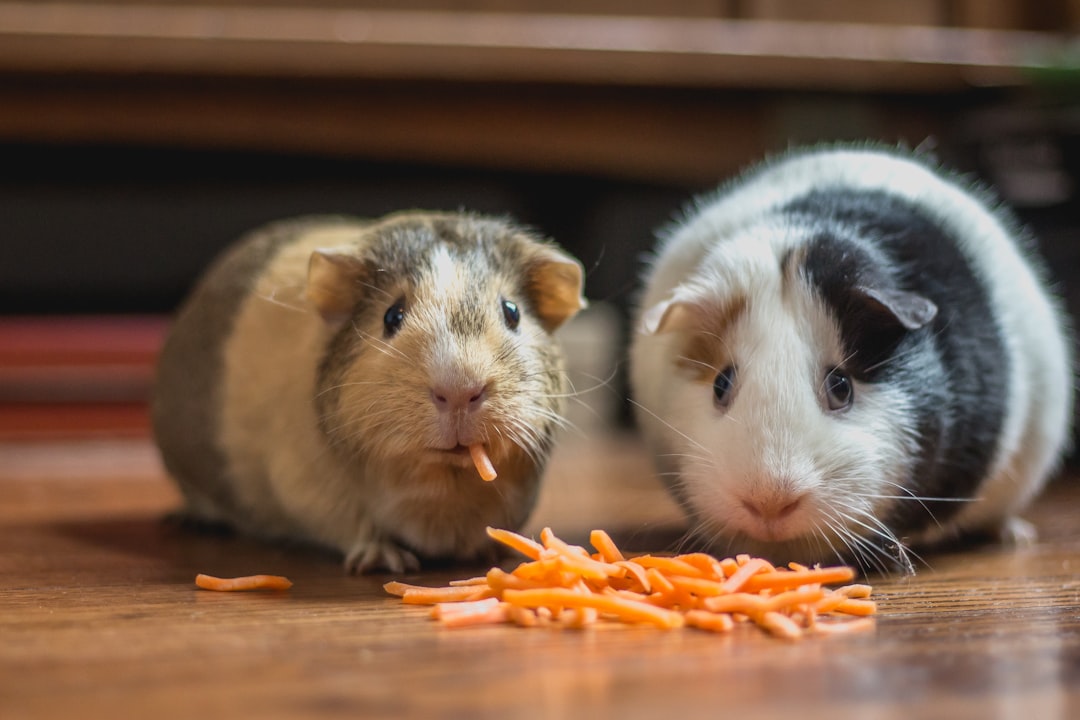
Guinea pigs are placid, they rarely bite and they take well to handling, which makes them a strong choice for a household with older children. They are herd animals, so a single guinea pig is not really an option, and the daily routine means hay topped up twice a day, fresh vegetables, and a full clean of the hutch or liner once a week.
Space is where the commitment really starts, and it is the part most buyers underestimate. The RSPCA is clear that a traditional hutch should not be a guinea pig's only permanent home, and that the animal needs a large exercise area as well as a sheltered sleeping area. Below 15C the RSPCA advises moving them indoors, because guinea pigs cope badly with sudden temperature swings. A pair also needs a proper supply of timothy hay, since hay is what keeps their teeth worn and their gut moving.
4. Syrian Hamsters: A Simple Routine and a Serious Cage
A single Syrian hamster is the classic first pet, and the routine really is simple. One complete mix, fresh water from a bottle, a sand bath for grooming, a spot clean through the week and a full bedding change once a week. Hamsters are strictly solitary, so two in one cage is a fight waiting to happen rather than company.
The trap is the cage itself. The RSPCA recommends a minimum of 100cm by 50cm of unbroken floor space and around 50cm of height for every species of hamster, including the dwarf breeds. Most cages sold as starter kits are half that length. A long single-storey enclosure such as the Savic Hamster Plaza 100 meets that guidance, and the BUCATSTATE 3.0 is the same idea in a lighter build.
5. Budgerigars: Cheap to Buy, Demanding to Keep Well
Budgies are the pet most people underestimate. A lone budgie in a small cage becomes a bored, noisy bird that plucks and screams, because budgerigars are flock animals that need company and daily flight. Kept properly, as a pair or a small group with a wide cage, daily flying time, fresh greens and a varied diet, they are rewarding and long lived, with ten years being a realistic lifespan.
They are also messy, they are loud, and they need more attention per day than any rodent does. If the cage is going to be ignored between school runs, a budgie is the wrong fit. Budgies chew constantly, so a rotating supply of shreddable toys matters more than any cage accessory.
6. Coldwater Fish: The Setup Is Where Beginners Slip
A tank looks like the lowest-effort pet in the shop and it punishes shortcuts harder than anything else on this list. A new tank has to be cycled before fish go into it, which takes weeks, and the filter media has to be rinsed in tank water rather than under the tap so the bacteria survive. None of that is difficult, but all of it is invisible until it goes wrong.
Once the tank has matured, the weekly job is a partial water change and a wipe of the glass, which is quick once the routine is established. Fish are also the only pet here that you watch rather than handle, which suits some homes perfectly. A starter tank with the filter included and a liquid water test kit are the two purchases that prevent the most common beginner mistakes.
7. Rabbits: The Small Pet That Is Not Easy
Rabbits belong on this list only because shops sell them as small pets. The RSPCA recommends a living space no smaller than 3m by 2m and 1m high for two medium rabbits, and that space has to cover both a shelter and an exercise area. Add hay as the bulk of the diet, annual vaccinations, neutering and a rabbit-savvy vet, and the cost stops looking small at all.
Get all of that right and a rabbit is a lovely pet that lives well into double figures. Get it wrong and you have an animal in a four-foot hutch, which is where most rabbit welfare problems begin. A hutch with an attached run is the minimum starting point, never the finished setup.
How to Choose Between Them
The list above is ranked by effort, so the decision usually comes down to your room, your budget and your daily routine. A few shortcuts through that:
- Smallest footprint that still meets welfare guidance: a same-sex pair of gerbils in a tank around 60cm long.
- Best for children who want to handle a pet: guinea pigs or fancy rats, with an adult supervising.
- Best for a flat with one wall free: a single Syrian hamster in a 100cm enclosure.
- Best if you travel often: none of them, because every animal on this list needs daily attention.
- Most expensive to get right: rabbits by a wide margin, then budgies kept properly in a group.
Products Mentioned
- Little Friends Savoy Gerbilarium - glass home that holds a deep bedding layer
- MidWest Critter Nation Single Unit - multi-level cage with solid shelves
- Cozy Pet RC05 - two-tier cage sized for a pair of rats
- Oxbow Western Timothy Hay - the base of a guinea pig diet
- Savic Hamster Plaza 100 - 100cm single-storey enclosure
- BUCATSTATE Hamster Cage 3.0 - wooden alternative with a deep base
- Pethee Budgie Toy Pack - shreddable toys for a parrot-type beak
- Tetra Starter Line 54L - filtered starter tank
- API Freshwater Master Test Kit - water testing before fish go in
- PawHut Hutch with Run - minimum starting point for rabbits
Frequently Asked Questions
Are small pets good for children?
It depends far more on the species than on the child. Guinea pigs and rats tolerate handling well, which makes them the better options for a supervised child, while hamsters are nocturnal animals that often resent being woken in the afternoon. An adult should own the feeding and cleaning routine, because a pet looked after by a child alone is a pet that gets neglected when the novelty fades.
Do guinea pigs need a companion?
Yes, and that is not a preference. Guinea pigs are herd animals, they are social to the point that a lone animal often stops eating, and the RSPCA advises keeping them with at least one other friendly guinea pig. The usual pairing is two females or a neutered male with one or more females. The RSPCA also advises against housing guinea pigs with rabbits, because rabbits can carry bacteria that cause breathing problems in guinea pigs.
Can I keep two hamsters together?
Not in a normal cage, no. Syrian hamsters are strictly solitary and will fight, sometimes fatally, once they are past the juvenile stage. Dwarf species are sometimes kept in carefully managed pairs, but that needs a very large enclosure and a plan for separating them if it goes wrong. One hamster, one cage is the rule that keeps both animals safe.
Which small pet costs the least to keep?
Gerbils are the cheapest to keep properly, because they eat little, their bedding lasts longer and they rarely need veterinary treatment. Rabbits are the most expensive, and the gap runs into hundreds of pounds rather than tens once the space guidance, vaccinations and neutering are included. Guinea pigs sit somewhere in the middle, mostly because of the volume of hay they get through each week.
How much time does a small pet take each day?
Plan for a daily routine rather than an occasional one. Feeding, a water check and a quick look at the animal takes only a few minutes, while cleaning, handling and enrichment add up to considerably more. Small pets also need their enclosure cleaned on a schedule, so the weekly job is the one that catches people out when work gets busy.
Final Verdict
If you want the easiest possible start, a same-sex pair of gerbils is the pick, because they are cheap, near-odourless and happy with a deep layer of bedding rather than a schedule of entertainment. If you want a pet that actively enjoys your company, a pair of fancy rats is the better trade, and a pair of guinea pigs is the safer choice with children in the house.
Whichever you choose, buy the enclosure first and make it the largest one you can fit, because every problem on this list comes back to space. Our hamster cage comparison, guinea pig cage guide and rat cage roundup go through the specific models, and the gerbil care guide covers the daily routine in more detail. Bedding is the one supply worth buying properly, and Back-2-Nature paper bedding suits gerbils, rats and hamsters alike.

Nina writes about small pets and birds for WhoPets, with a focus on proper care standards. She has owned hamsters, guinea pigs and budgerigars, and cares about evidence-based husbandry over trendy pet products.
As an Amazon Associate we earn from qualifying purchases.
Last reviewed: September 11, 2026 · Evidence-based content · Contains affiliate links